It’s been a fast-paced, jam-packed weekend — trying to get to sessions at the Melbourne Writers Festival on time and post blog reports — juggling train cancellations, sleep deprivation and children’s sporting logistics in with the mix. Here’s a quick summary of how it panned out:
10.30: Saturday morning – meet with fellow ‘Emerging Bloggers’ for brunch at Beer Deluxe in Federation Square. Running late, I realise I’ve left my festival guide at home. Oops…
11.30: Head to see former Premier Steve Bracks discuss his new book at BMW Edge. Unaware of a location change, I walk in to find I’m at another session of The New Yorker team. A fortunate turn of events as they are much more animated than the night before.
1.00: Attempt to see event ‘Why I Read’ and am directed to ACMI Studio 1. Sitting there, I realise as the presenters sit down that I am again in the wrong venue. The doors close and a staffer sweeps a large black velvet curtain across the door, blocking an easy exit. The presenters begin to speak as I try to inconspicuously escape behind the black curtain, causing it to billow wildly. To my horror, the glass door is locked. The attendant on the other side mouths that she can’t open the door and I will have to use the exit on the OTHER side of the room. Moritifed, I have to come out from behind the curtain and walk back into the room and up the stairs, around the back of the audience, down the stairs and out the door, while historian Geoffrey Blainey and Gideon Haigh pretend to ignore my clumsy and disruptive performance. Arghhh…
1.15 – Finally arrive at ‘Why I Read’ which is back at BMW Edge, where Sloane Crosley, Drusilla Modjeska and Sir Andrew Motion are discussing the power of literacy to transform lives. I enter the room silently, managing to find a seat without drawing attention. Phew. Sir Andrew is discussing his childhood experience of reading The Lion, The Witch and The Wardrobe and how the image of a land frozen in ice and snow was crucial in his development as a future poet, being one of the first moments where he became aware of the power of metaphorical images. Sloane then talks about how her mother read to her from Gone With The Wind every night – a special ritual they shared and looked forward to. And Drusilla remembered vividly her teenage experience of reading Tess of the d’Urbervilles. It was the first time she became aware that redemption for the main character in a book is not always possible. It was shattering and in a sense, made her aware of how books can have a transformative experience.
2.30 – Attend a session called ‘Friendly Fire’ and WOO HOO – I arrive at the RIGHT venue and on time. Am very proud of myself. The presenters include Marieke Hardy, Benjamin Law and again, Sloane Crosley with the highly competent Estelle Tang chairing the event. It’s a funny, feisty session with all panelists performing readings from their books which brings to life their individual writing styles and personalities.
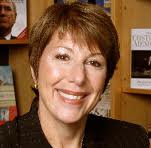
Sloane Crosley, Marieke hardy, Benjamin Law and Estelle Tang
All have written books exposing raw material about their lives and relationships with friends, family and lovers. Questions fly about how far one is prepared to go as a writer and what you are prepared to risk by revealing so much. For Sloane, she says if it’s a good enough story you’ll figure out a way to tell it. Marieke says her instincts and feelings are consistently evolving about her writing but she doesn’t know how to write any other way. Although, she concedes, she did invite a few people she wrote about in her last book You’ll Be Sorry When I’m Dead, to have a right of reply. In the future however, Marieke wants to make comedy less of a focus in her writing and to concentrate more on a truthful emotional response to situations. Ben says his family took a fairly relaxed approach to his book, Family Law. His father didn’t even read the first manuscript, saying he was too busy and said he understood memory was selective and he accepted Ben’s story was his own interpretation of their family history.
5.00 – Catch train home to deal with domestic responsibilities.
8.00 – Head back to the city to Federation Square and BMW Edge for the MWF Opening night party. This was a wonderful opportunity to meet with everyone involved in the festival, from writers and organisers to friends and fellow bloggers. Fletch came along too and was delighted to meet New York author Sloane Crosley who I had raved to him about after interviewing her on Friday.
Much fun was had by all. The next day I attended an exceptional session ‘Remembering Patrick White’ which I think deserves a blog on its own – given it’s the centenary of the great man’s birth. Stay tuned.
It was like an awkward meeting between two strangers in an arranged marriage. The conversation sputters and uncomfortable silences push them further apart. Hopes are high they’ll fall in love, but the first introduction isn’t promising.
That was how it felt at ‘An Evening with The New Yorker’ at the Melbourne Town Hall on Friday night. It was billed as one of the highlights on the Melbourne Writers Festival program — the idea of bringing Manhattan to Melbourne — with the magazine’s intelligentsia sharing their insights on what shapes one of the world’s most celebrated publications. The panel would include Editorial Director Henry Finder, art critic Peter Schjeldahl, staff writer David Grann, music critic Sasha Frere-Jones and cartoonist Roz Chast.
To start the evening, Henry Finder, with mellifluous voice and laid-back charm, explained how ninety per cent of New Yorkers read the cartoons before the articles, so ‘Why don’t we do what the New Yorkers do and look at twenty of the magazines most popular cartoons first?’ Seemed like a good idea.
All five of The New Yorker crew and the audience turned eyes upwards to the large screens dominating the wall behind the stage.
One after another, a new cartoon appeared and the rumblings from the audience grew louder and Finder began scratching his head. Hadn’t anyone thought about how tiny the words on a cartoon caption appear in a large hall and that no matter what size the cartoon, that from a distance, it’s impossible for an audience to read them?
Voices started calling out ‘We can’t read them!’ so cartoonist Roz Chast tried to help but even from her position on-stage, couldn’t. Adopting a baby voice, she bleated, ‘I can’t read it either. It’s too tiny.’ A smattering of laughter then much applause when the cartoon run finally came to an end.
Quickly moving on, Finder then, appropriately, introduced Chast as the magazine’s distinctive resident genius and asked her how she arrived at The New Yorker. Her delivery was entertaining, like her cartoons. While she graduated in painting, the small apartment she lived in meant it was easier to draw so she began focusing on illustrations. When she dropped off a portfolio of about 60 cartoons to The New Yorker, she was surprised when she returned to pick it up the following week, to find not only did they want to buy one, but they also asked her to return the following week. The rest is history.
Next Finder introduced staff writer David Grann, who critics refer to as one of the most accomplished narrative reporters of our time. He told of how he worked from the bottom up, first as a copy editor and writing obituaries for various publications, and how that early training was essential in the process of becoming a writer. His stories were colourful and engaging – as you would expect from a specialist in his craft.
Then we heard from award-winning art critic Peter Schjeldahl, whose many accolades include being awarded a Guggenheim fellowship in 1995. Regardless, the man is 70 and his forte is not public speaking. He was a poet who dropped out of college in the early 60s, worked as a newspaper reporter and then became an art critic by accident. His first anecdote was fine, but as the evening wore on, his conversation and thought processes slowed, so that there were more ‘ah…um…anyway.,.ahs’ than actual words. One sentence seemed to take an entire minute to articulate. It became so frustrating, people began leaving. Someone told me they saw him nod off on stage. I’m not actually sure, because I think at some point, I did too. Not quite the riveting night I was expecting.
We also heard from music critic Sasha Frere-Jones, who started at the Village Voice. He too fell into his profession by accident; an aspiring musician who wrote a few pieces for a local paper as a favour to a friend, then became a writer. Surprisingly, for someone whose passion is music, his voice drones in monotone. I’m not sure if that’s just his style, or if he was zonked by jet lag or uncomfortable with pubic speaking. Or he’s got that uber cool, ‘I’m too hip to be here’ thing going on.
The entire evening’s presentation felt slow and disjointed. As if very little thought had been put in to what each participant was going to say and how the structure of the night would work. Perhaps the venue didn’t help. The Melbourne Town Hall is a vast, echoing space with a wood-paneled 1950s feel and a mere two potted plants on stage for decor. It feels dusty and old-fashioned – not exactly the right fit for our most forward thinking minds from New York.
I met with a group of friends afterwards to get some feedback. Was I being overly critical? Their response was similar. Joanne agreed that the Town Hall was an inappropriate choice of venue. ‘It was embarrassing. I mean, they’re our guests. It felt like a country bumpkin hall with the ghosts of debutantes past.’
Lisa was also disappointed with the structure of the evening. ‘It was a hotchpotch. It was as if they decided what to do on the night while in the Qantas club lounge or while they were on the plane,’ she said. ‘And the art critic was excruciating. I mean, he had some good stories to tell but he was all over the place. At the same time, I loved David Grann and his story about the giant squid.’
Jaqui, an avid New Yorker fan, had a far more positive view. She said her family subscribes to the magazine so they can leave it hanging around their coffee table to impress visitors. ‘It’s so we can look really pretentious at home,’ she said, laughing. ‘And I fully read all the cartoons first, like they said. They have such in-depth stuff on so many fascinating things. Mad professors that are doing work at UCLA, authors that were writing in Dickens time. It’s great stuff. So tonight it was good to hear how they put it together behind the scenes. Roz was very Manhattan. And Sasha was pretty cool. The way he swaggered in. It’s that whole New York thing. And I could have listened to David Grann all night.’ A satisfied customer.
Yesterday a happy accident occurred to alter my point of view. I was planning to listen to former Premier Steve Bracks discuss his book and didn’t realize there had been a change of venue. So when I walked into the BMW Edge auditorium, there was the team from The New Yorker – AGAIN. This time, ‘What’s the Story’ was topic of discussion. I stayed to see how they fared compared with Friday night.
Maybe they’d all had a good night’s sleep. Maybe it was the modernity and impressive architecture of the BMW Edge that lifted their spirits. Whatever the reason, it was a far more vibrant and entertaining session. Frere-Jones, in particular, was more animated, his voice conveying a lively timbre, his hands gesturing to emphasise a particular point. He even expressed with humility, a certain astonishment that he had come to work for such a prestigious publication. ‘You get sucked up into this spaceship and you wonder how it all happened,’ he said. ‘Even now, I wonder when I talk, do I sound like I work for The New Yorker?’
Finder was impressive as moderator, asking more pertinent questions and summing up the talents of his staff, like Frere-Jones, with eloquence. ‘Sasha has an effortless authority without being chesty about it,’ he said. Lovely.
David Grann was again the standout as a storyteller with intriguing tales of his most challenging journalistic assignments.
The applause at the end of the session was thunderous, the crowd enamoured. Perhaps this arranged marriage will work out after all. Melbourne and The New Yorker do see to get along quite nicely. How much is a subscription, anyway?
It’s only day two, but New York author Sloane Crosley wins a gold medal for best interview stamina of the Melbourne Writers Festival in my book. After landing in Melbourne direct from a two-day stop-over in Los Angeles, she walked straight into the hotel foyer with bags in tow and happily joined me for an interview over much-needed coffee.
No unpacking and not even a quick visit to her room to ‘freshen up’. And she was smiling without a hint of jet lag . In fact, she was positively beaming. Probably because she has been wanting to visit Australia for many years and is delighted to have finally arrived. Her family almost moved here when she was a child, so she developed a slight obsession with all things Down Under.
Crosley says she was thrilled when the MWF asked her to take part. ‘The first thing I did when I got the invitation was to forward it to my family and watch them writhe in jealousy,’ she says. ‘I’m always surprised when the humour in my books translates in another country, even an English-speaking country, but it’s great.’
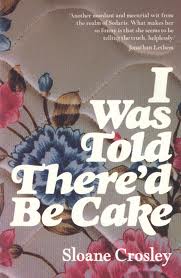
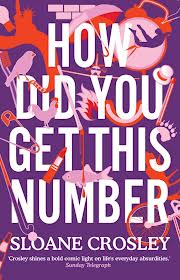
Both Crosley’s books I Was Told There’d Be Cake (2008) and How Did You Get This Number (2010) became The New York Times bestsellers. The first, written when Crosley was 26-years-old and published at 28, quickly became a huge success. It wasn’t something she’d anticipated, having worked as a publicist in a publishing house where she knew how difficult the road to literary glory could be.
”The first book, I didn’t know what I was doing. I worked with these amazing authors. I knew how hard it is. And being close to them did not have the effect of making me feel “Oh, I can do this too”. It had the adverse effect. I will never, ever be Tony Morrison.’
‘I’d also been told not to expect anything, because it was a book of essays and it wasn’t expected this genre would be as popular as it was. So it was surprising.’
And she sprinkles her conversation with the same style of self-deprecating humour that is a trademark of her books. ‘Sometimes I see people reading my books on the subway, And sometimes they look so tragically bored, I just want to trip them over when they leave,’ she says, laughing.
It’s unlikely Crosley will ever use the word ‘cake’ in a book title again. ‘I put on about ten pounds, because everywhere I’d go, there was cake. It was the same thing at all the book launches. It was great. And it was awful. The second book is a lot darker and the essays are longer. It’s a much bigger book. I think I was in a bad mood when trying to write a humour book.’
Crosley says she always knew she wanted to write, although initially at college she studied archeology and anthropology before switching to a literature major. Next she moved on to several internships at magazines and became a contributor to a long list of publications, including The New York Times, The Guardian, The Irish Times, The New York Observer, The Village Voice, Vice Magazine,Elle, Glamour, Vogue, W, Teen Vogue, Salon.com, GQ,Esquire, Playboy Magazine, Self, Maxim Magazine, SPIN and Black Book magazine – writing essays and interviews. She was also a weekly columnist for The Independent in the UK and was the editor of The Best American Travel Essays 2011.
There have been plenty of accolades too. I Was Told There’d Be Cake also won The Best Audio Books Of The Year by Library Journal and was one of Amazon.com’s Best Books of 2008. Plus, in 2009, I Was Told There’d Be Cake was a finalist for the Thurber Prize for American Humor.
During the festival, Crosley is sitting on panels over four sessions this weekend. The one that sparks my interest is tomorrow at 2.30 – Friendly Fire. It’s all about how far authors are prepared to go when writing about friends and family and whether they’re prepared to put relationships at risk. I Was Told There’d Be Cake is brutally and refreshingly honest, so did Crosley have any concerns about a backlash when she was writing?
‘I genuinely didn’t think that many people would read it. There are parts of it that are a little cruel that I would go back and change. But not because they’re mean. More because they’re not as well written as I would like them to be. ‘
So were there people in her life, maybe her parents, who were offended? She takes a moment to consider before answering. ‘I try to protect people. You change things, such as defining characteristics. But my parents were fine with it. The truth is, it’s a nice portrait of them, so it’s fine. In fact, considering what gets said around the Thanksgiving table, they got off easy.’
Some critics have described Crosley as a modern-day Dorothy Parker. She’s flattered by the comparison. ‘There’s a great Dorothy Parker quote,’ she says, ‘that “Humour should always be used as a shield and never as a sword.” Very lovely but very hard to sustain over the course of a book.’
There was one friendship that went by the wayside as a result of the Cake book, however Crosley says it had practically ended anyway. ‘That was partly what that essay was about. So it is a little bit mean but to my mind, it’s worth the sacrifice because it makes a larger point about what happens when friends grow up – what they hang on to and what they don’t. It’s about how complicated women’s relationships can be. Everyone knows that a break-up with a woman can often be more difficult than with a man, and so that’s what it’s about.’
The second friendship to suffer a minor fracture was due to Crosley painting a friend’s boyfriend in a negative light, not knowing how serious the relationship was and that they would later become engaged. Unsurprisingly, she was left off the guest list for the wedding.
Now she’s flexing her literary strengths in new directions — writing a novel and a screenplay. ‘It’s slightly harder, but it’s like using a different muscle. With non-fiction you’re dealing with things that have actually happened to you. With fiction, it feels strange when it’s going well because you have made up these characters and they feel so real. Thats a sign of insanity, right?’
Being early days, Crosley would rather stay tight-lipped on what both projects are about. But she does have some good advice on writing processes. It’s all about getting rid of distractions. ‘I do have to have some sort of pattern and structure. I am not allowed to check any emails before I write at least 250 words. No errands in the middle of the day otherwise I don’t feel like it’s a work day. The groceries, the laundry, the gym — all of that stuff gets done some other time. And interviews. Mostly I just try to concentrate on sitting down and writing as much as I can. I get up and make coffee, have breakfast and then right about 7.30 or eight and write till about lunch. And then I say I can have the afternoon off but I often do a bit more writing.’
As for other interests, Crosley says she’s a very bad guitar player and singer. But she does have a crafty side — making dioramas for each chapter from her last book and birthday cards for friends.
As for her ultimate goal in life, it’s about being true to herself. ‘There’s a quote by someone else that I’ll use here. “The genius is the one in the room who is most like himself.” My goal in life is to be most like myself.’
I think I got a pretty good version of that this morning – charming, witty and warm. Welcome to Melbourne Sloane Crosley!
(Sloane Crosley is taking part in the Melbourne Writers Festival tomorrow at 10am, 1pm and 2.30pm. Also on Sunday at 6.00pm. Check the MWF website at http://www.mwf.com.au for more details.)
It must be hard being nominated as Keynote Speaker at any major festival, especially when you’re also a famous movie star, because people’s expectations of you are enormously high. Unrealistically high.
I wondered how Simon Callow felt when he stepped on stage to give his address at the opening of the Melbourne Writers Festival last night. You could feel the weight of expectation in the air – the audience collectively holding its breath.
I have to confess I was one of the guilty ones sitting there with extraordinarily high hopes. For many reasons.
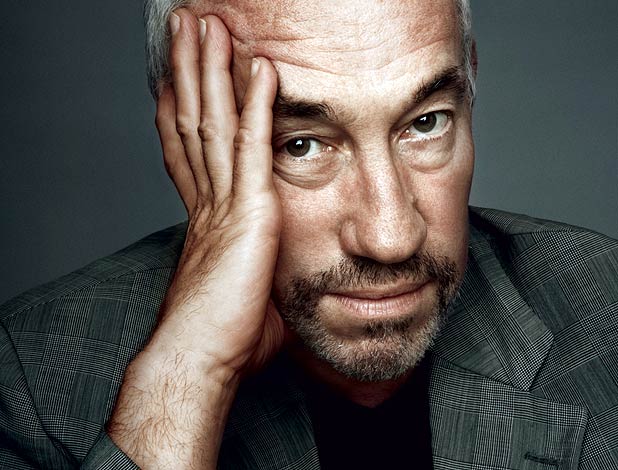
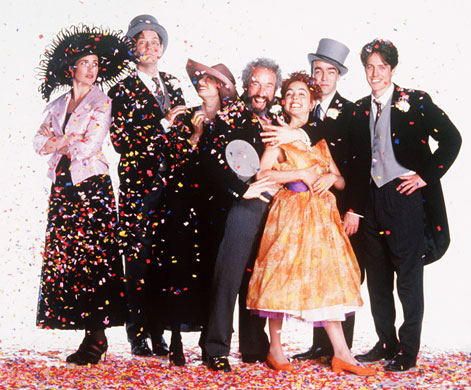
One, I was excited about seeing Simon Callow who I have long admired as an actor, ever since he captured adoration worldwide with his exuberant portrayal of the lovable Gareth in Four Weddings and a Funeral. He’s heralded as one of the world’s great theatre actors, as well as a talented and respected writer.
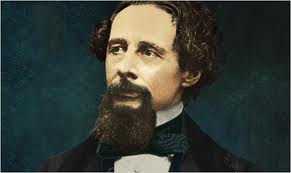
Two, Callow was delivering his keynote address on Charles Dickens. (he recently wrote a biography) Old-fashioned though it may be, I too am a huge Dickens fan, having spent most of third year Uni focusing on his work under the guidance of uber sharp tutor, Lousie Adler – now famed CEO and Publisher of Melbourne University Press Publishing.
Three, I was like an excited kid looking forward to the first day of school, having been chosen as one of five ‘Emerging Bloggers’ to cover events at the Melbourne Writers Festival. I couldn’t wait for it all to begin.
Yep – it’s all there, isn’t it? I was setting myself up for a fall. How on earth could one man, Simon Callow, fulfil such ‘great expectations’? (sorry, couldn’t resist that one…)
An entertaining Max Gillies gave Simon Callow a warm and heart-felt introduction, describing his book as ‘a thrilling account of Dickens.’
Then as soon as Callow took to the stage, the audience hushed. You could almost touch the awe. MWF Director Steve Grimwade helped us all fall in love with him just a little bit more with a story about how Callow had popped into the festival office the day before – unannounced – just to meet the staff.
Callow started graciously, describing Melbourne as one of the most beautiful, welcoming and cultured cities in the world, but stopped short of being saccharine by thanking us for our hospitality in providing him with a dose of English weather – the wild afternoon storm. Much laughter from the audience.
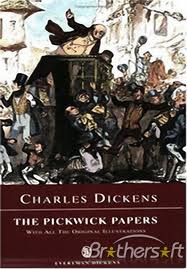
And then he took us back to where it all began – his relationship with Charles Dickens and what inspired him to write his book. Callow was just seven-years-old when he was taken to a production of A Christmas Carol which he says, ‘scared the hell out of me.’ That led him to avoid Dickens for several years until he was laid up with chicken pox and his Grandmother brought him a copy of The Pickwick Papers. ‘I fell in love with Dickens. It was a world I absolutely and instantly adored,’ he says.
From there, Callow described his life as a theatre actor, with an hilarious account of one production of A Christmas Carol where he and a fellow actor accidentally fell through a trapdoor in the middle of a show, only to climb back up and continue performing. He says if it wasn’t for the heavy Victorian costumes they were wearing, they could have been killed. A quick-witted cast member saved the moment by ad-libbing, ‘So Mr Fezziwig, down the wine cellar again, hey?’
At this point, the crowd is laughing on cue and you can appreciate how Callow naturally draws on his skills and experience as an actor to turn his speech into a performance. He’s polished, articulate and witty, yet still manages to radiate a genuine warmth that connects him with his audience.
Next, we see a more solemn Callow as he discusses Dickens life and his work. His tone becomes more serious as he talks of the different genres Dickens wrote – short stories, essays, journalistic work, novels and terrible plays. Yes, apparently there was one literary skill Dickens couldn’t master.
‘It was because he was stage struck and he tried to recreate the theatre of the time, so that his plays had no trace of Dickens in them. Even he said that a play always turned into work.’
As for Dickens incredible talent for story telling, Callow believes much of this was shaped by his childhood. Dickens’ father was thrown into a debtors’ prison and young Charles was put into lodgings in northern London where he was forced to work ten-hour days in a freezing, rat-infested building to provide for his family.
‘It was Dickens’ impoverished childhood,’ says Callow, ‘that helps explain his extraordinary compassion, his extraordinary outrage at the lot of the dispossessed, the disadvantaged. He could easily have become a vagabond, but he rose above it with an incredible optimistic energy.’
Callow becomes more impassioned describing Dickens relationship with his readers. ‘He only saw something as real when he had an audience. His readers were the great central love of his life. He needed to be in direct contact with them. He knew that the readers felt he spoke for them, that he was their champion and he gladly accepted the role.’
So many tales, so beautifully told. I realised then what I had wanted from the evening’s event. Hearing an exceptional actor talk about an extraordinary author — I wanted to be moved, to feel shivers up the spine.
Then Callow finished with a tale about how he played the role of Dickens in an episode of Dr Who. ‘The script portrayed Dickens in an imaginative and deeply felt way,’ he says. ‘At one point, Dickens turns to the Doctor and asks, “You know something about the future. Tell me, will I be read?” The Doctor says “Yes.” Dickens than asks, “And how long will I be read for?” And the Doctor answers, “Pretty much forever.” And that is how I feel too.’
Ah, the goose bumps.
Thank you, Simon Callow, for a magnificent start to the 2012 Melbourne Writers Festival.
Well-positioned on Melbourne’s most famous fashion strip – Chapel Street – Scanlan & Theodore has long been winning accolades in the style-stakes, always managing to keep one polished stiletto ahead of their competitors.
According to all reports, retail is doing it tough right now – but judging by the number of customers brushing shoulders in the store yesterday, Scanlan & Theodore isn’t feeling the pain. That’s probably because there aren’t many Australian designers who can match them for quality and unique styling.
I was also impressed by the number of sales staff in store yesterday, making sure no customer was left unattended. Now that’s rare. And while they’re all blessed with model-perfect looks and legs that go forever – which is a tad intimidating – they’re all very friendly and helpful – another big tick.
But pricing? Wow. I guess that’s why some people call fashion at this level ‘art’ as opposed to the mass-produced, high-turnover, land-fill fashion from the global franchises.
And there are definitely some pieces worthy of that title. Such as this amazing red lace dress, which hugs the silhouette like a classic Valentino. Pure art.
Baby jersey long dress $700 with Textured leather sleeveless jacket $650
Keeping with the red theme, I was also impressed with the long red jersey dress, layered with a sleeveless red leather jacket. Not something that would suit anyone bigger than a size eight, and I’m not sure exactly where I’d wear it – but I still fancied it anyway. I reckon Cate Blanchett could carry it off.
For race-goers wanting to lock in their Spring Carnival wardrobes early, I found two dresses that might appeal. The first, being more structured, would work well for Derby Day, while the floaty mix of aqua, pink and purple would be perfect for Oaks.
Personally, I really wanted to take home the black leather peplum top, which turns a prim trend funky. The urban weave bomber jacket could also have found a home in my wardrobe – hypothetically.
And in case your eye was drawn to the necklace decorating the peplum top, take a closer look. Indeed, a lovely pendant on a metal rope – yours for just $600…
Scanlan & Theodore also showcase a fab range of shoes and handbags. I’m very partial to rose gold right now so loved the black bag, which looks far more attractive than the photo gives it credit. And the camel Alaia studded wedge would be perfect with just about anything – if only they could off take a zero…
Alaia studded wedge $1400 and Mini square bag with yellow $450
Okay, I should stop going on about the price-tags. I’m probably just bitter and twisted that I’m still paying off a big holiday and can’t afford them. But if you can, get on in there and happy shopping.
Scanlan & Theodore is located at 566 Chapel Street, South Yarra.
Ph: (03) 9824 1800
They also have stores at 1061 High Street, Armadale and in Little Collins Street in Melbourne.