Much has been said about feminist academic Germaine Greer in the past week and not much of it has been nice. Much of the hysterical criticism stems from Greer’s performance on the ABC’s QandA panel show last week. Comments she made about our PM’s backside and female genital mutilation have been met with SHOCK and HORROR and bandied about in newspaper headlines with great disgust — often taken out of context.
Keeping an open mind, I headed to a Melbourne Writers Festival session last Friday where Greer was to be interviewed by Benjamin Law about her life and passions. I was curious to see for myself. Was this iconic dynamo going to prove her critics right by ranting like a lunatic, or would she shine like the beacon of forward thinking that thousands claim her to be? Is all the brouhaha merely evidence that those in the privileged position of having a public voice can’t help but subscribe to our cultural sport of slashing down tall poppies to a dirt-eating level?
The interview started with an entertaining account from Greer about how she posed naked, ankles behind ears, for a university-produced magazine Suck. This evoked much laughter from the audience – the woman has a witty and self-deprecating sense of humour.
Then onto more serious matters, where in an erudite and passionate manner, she provided an impressive discourse on a wide range of topics.
Female genital mutilation wasn’t one of them, so I can’t pass judgment about that particular controversy, but if you’ve read that Greer almost condones the practice, you might be best off taking a look at a piece written by academic Dr Camille Nurka, a Lecturer in Gender Studies at the School of Social and Political Science at Melbourne University.
Instead of discrediting Greer with losing the plot, Nurka says Greer talked about the issue with much tact and sensitivity.
But back to the Festival Session. I’m not going to quote Greer at great length — rather, give you in point form six reasons why she won me over on the day.
(1) Greer hasn’t read Fifty Shades of Grey.
‘I’m not interested in 50 Shades of Grey. I’m not interested in fucking, buggery or spanking. Life’s too interesting to go into someone else’s suburban bedroom and start snuffling about. The ground is already so well trodden on all of this. And sado-masochism is something I dread in a way, because I’ve seen what happens in sadistic relationships and it’s horrifying. The fact is they become hooked on basic humiliation and crave it, which to me is horrifying, ghastly.’
(2) She made some excellent points about why our rape laws are archaic and need to be re-written, which would lead to a higher rate of prosecution.
‘There are very few convictions because rape is so hard to prove. … We should abandoncriminal rape and have a single law of sexual assault and then include everything that could possibly happen under that.’
‘Marriage is a mess as a social institution. You don’t know what you’re getting into because it’s a contract with no clauses and you don’t know what they are till you’re in the divorce courts. We need co-habitation agreements, which list clauses about children, money, sex etc… I was married for three weeks and then thought, hell, I’m not going to hang around for any more of that shit.’
(4) Her explanation regarding the comments she made about PM Julia Gillard’s dress sense.
‘I spoke for twenty minutes about what a great job she was doing as Prime Minister, then I make one flippant remark and that’s all anyone talks about. I’ve got the same figure as Julia – narrow shoulders and a fat arse. … Labor is putting too much pressure on her to be decorative and UN-serious. She should just wear what she’s comfortable in – plain suits – and get on with the job.’
(5) She promotes eco-feminism and getting back to nature.
‘Ideally, we should all try to have a small apartment in the city and a patch of earth in the bush which we try to get back to what it used to be in its natural state.’ (Spending time with nature)…it brings rewards in terms of solace. It doesn’t fix things, but it makes them easier to bear.’
AND MY FAVOURITE…
(6) Do Less Housework. Greer says women put too much pressure on each other to maintain an overly hygienic and picture-perfect home.
‘It’s okay to be dirty! STOP cleaning the house! It’s important every now and then, to be dirty.’
Hear, hear!! I’m throwing out the vacuum cleaner and washing detergent as I type.
While I didn’t agree with everything Greer said, I did admire her style, charisma and vigour. At least she’s original and dynamic, and in a world populated by sycophants who just want to please the crowd, it’s refreshing to hear someone who says what they like. And she gets us talking.
There’s a quote I remember reading from Greer many years ago, where she said, ‘I grew up thinking there was one unpardonable sin – to be boring.’ That, she never will be. Perhaps that’s why she never apologises for the controversies she causes either– and I like that too.
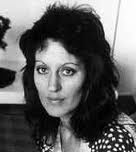
At the end of the session, several young groupies, armed with newly bought copies of The Female Eunuch, descended upon the stage for autographs. I could hear whispers from those who loved the session and some who were disappointed. Personally, I don’t see Greer as an ‘icon’ perched on a pedestal as high as the Rialto, but nor do I wish to kick her in her ‘fat arse’ for expressing a point of view. The woman did, after all, write a book that paved the way for the feminist movement and you’ve got to give her credit for helping to shape history.
I enjoyed her company for that hour, but afterwards, I didn’t want an autograph. Instead, I would love to have gone to the pub with her for a chinwag over a wine of two. With a person – not a hero, nor a villain. Now that could have been a very interesting night.
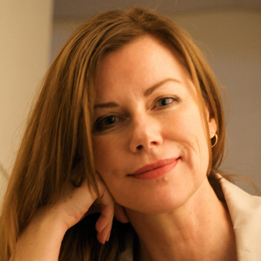
While Father’s Day is not an occasion author Deborah Robertson likes to celebrate, this year the annual event will represent an important milestone. It’s the first time she’s going to speak publicly about her troubled childhood, which in the past, she’s preferred to channel through various characters in her books.
Taking part in Sunday’s session, ‘Father’s Day’, Robertson will be on a panel – including Patrick Gale, Tony Birch and chair Toni Jordan – discussing relationships with dads, absent fathers and the importance of father figures.
Robertson has also written a feature piece for The Age Good Weekend magazine, explaining why Father’s Day isn’t a day where everyone can play ‘happy families’. She says it’s also the first time she’s written about her upbringing. ‘Up to this point, I’ve done all my exploration of my childhood, which was a really difficult one, through fiction. Which is a mask and a disguise and a way of distancing myself from everything,’ she said.
Robertson’s father was a gambler. Betting on horses was an addiction which tore her family apart. ‘I don’t remember a time when he wasn’t gambling,’ she said. ‘And he deserted us. He just left one day because he’d embezzled some money and he went missing for years. Years… I was the oldest of three. My Mother coped magnificently in terms of working hard, keeping food on the table and getting us to school, but she was emotionally very fragile so I did a lot of that sort of care.’
Eventually, Robertson’s father returned, but their relationship had been irreparably fractured. ‘When he finally gave himself up and came back, he came back to the family and we were a family again, but we were never close. He would never talk about what happened and you can never be close when something as big as that has happened. He was just a terribly isolated, unhappy man.’
Even now, the emotional toll seems painfully present in her eyes. ‘Father’s day, his birthday, Christmas day, their wedding anniversary day…they’re just sad days. There’s just no other way of dealing with them. They’re just sad.’ The Spring Carnival in Melbourne is also a difficult time for her. ‘Melbourne Cup Day is sort of grotestque to me. It’s a day that I don’t feel like I’m Australian, because I get bad-tempered and feel isolated and I just can’t connect with the idea of a flutter.’
After years of tolerating a strained relationship, Robertson says she is now estranged from her father and has been for the past year, since her parents finally separated. And while Robertson is strongly anti-gambling, her story this weekend is not a lecture from a crusader. It is told from the perspective of what it is like to be the child of an addict. ‘My particular story is gambling, but I wrote this story, trying to leave enough space in it for people to come in with their own experiences.’
She is however, angry that gambling, (pokies in particular) is so readily available in Australia. ‘I’m from Western Australia and we never had pokies in WA and the world hasn’t crumbled; no one’s died of boredom. We have a casino but that’s completely different to having pokies at pubs where families might go to for dinner.’
Robertson moved to Melbourne three years ago – giving up a long-term job teaching at university, to become a full-time writer. ‘I was exhausted and Careless had been successful enough to mean that I had a contract and an advance for another couple of books. I turned fifty and realised I was no longer ever surprised by anything in Perth, which is pretty serious for a writer. So it was inevitable. I almost didn’t have a choice.’
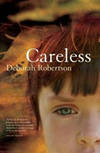
Careless came out in 2006, winning enormous literary acclaim. It was handed the Nita B. Kibble Award and the Colin Roderick Award, not to mention being shortlisted for half-a-dozen other literary prizes. It’s about a young girl, Pearl, whose little brother is killed in a shocking act of violence. For a first novel, such success was gratifying. ‘I was incredibly moved to know I’d made a connection with lots of people that I didn’t know.’
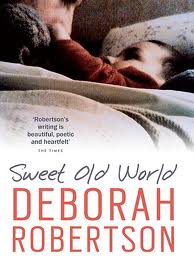
On Saturday, Robertson is also taking part in the MWF, on a panel in a session titled ‘Fish out of Water, which focuses on ex-patriate characters where she’ll discuss her latest book, Sweet Old World. It examines the serious issues involved in a man’s mid-life crisis and his unfulfilled desire to have children. ‘And he’s estranged from everything,not just his country of birth,’ says Robertson. ‘I think often for men, the desire to become a parent doesn’t happen till later so they can miss out. Fathering is a rite of passage in masculinity and we don’t observe rites of passge in society much at all.’
For more details about the sessions Deborah is speaking at this weekend, go to the Melbourne Writers Festival website at http://www.mwf.com.au/2012/?name=Home-2012
It was an appropriate venue – The Toff In The Town – to hold the annual Ned Kelly Awards, celebrating Australia’s best crime writers, as part of the Melbourne Writers Festival. From the outside, a dingy old building that hides secrets within. Even the 1950s tiled stairwell, cracked and stained, doesn’t prepare you for what lies ahead. A lush dark red restaurant with private dining booths lurks on the second level, boasting a surprisingly good menu and great reviews. Then on the third, a dimly lit bar and band room oft sought after by high profile musicians wanting to play for an intimate audience.
It was here – the room dotted with small round tables and groups gathering in dark corners and hiding in the back shadows – that the Ned Kelly Awards got underway on Wednesday evening.
Jane Clifton, as MC, kept the night ticking over with witty banter between each of the main awards. It was noted by one presenter that the awards get bigger and better each year, proving that crime writing is indeed flourishing in Melbourne.
Hence the suggestion we build a huge ‘CRIMINAL’ figure at the gateway to the city – in keeping with other giant monuments around the country such as the Giant Pineapple, Giant Avocado, Giant Banana or Giant Blue Heeler. Yep, I reckon that’d be a sure-fire winner with the tourists…. But which crim would we pick? And where would he or she be placed? I think I’d rather just list the award winners than put my personal safety at risk by guessing and offending God-knows-who.
Peter Twohig, author of The Cartographer, won Best First Crime Fiction. He describes his novel, which is about a young boy mapping crime in Melbourne as
‘A light look at some very dark stuff,’ and insists, despite much questioning from those who have read it, that it IS all completely fiction!
Eamonn Duff took out the award for Best True Crime for his book, Sins of the Father, which delves into the Schapelle Corby case and took three years to write. Happily for him, he couldn’t be there in person to collect the award as he is already overseas promoting his book in the UK. Short story writers were also recognised; this year’s SD Harvey Short Story Award going to A.J. Clifford for Summer of the Seventeenth Poll.
Described as an unsettling novel, Pig Boy, by J. C. Burke was awarded Best Crime Fiction. Burke also took three years to write her book, which focuses on troubled teen Damon Styles and what happens after he is expelled from school on his 18th birthday.
The highlight of the evening was the presentation of the Lifetime Achievement Award. This year’s winner was flagged as complex, compelling and cutting-edge, whose publisher promotes her as Australia’s Queen of Crime. And the winner is….
Over the course of her career, Lord has written 15 novels, a children’s book, won the Ned Kelly Award for Best Crime Fiction in 2002, and wrote the highly popular Conspiracy 365 Young Adult series, which has since been made into a television series.
As a journalist, I was naturally drawn to the Melbourne Writers Festival event, ‘BIG IDEAS — Telling the World’s Stories: What happens when the Journalists Leave?’ Likewise, so was Melbourne’s public and journalistic community, with the session at the BMW Edge being a sold-out event.
Chairing the panel was award-winning freelance journalist Margaret Simons, who is also the Director for the Centre for Advanced Journalism at Melbourne University and the author of ten books.
The focus was on how media reporting is changing in a world where our tools of communication are better than ever before. How is journalism being influenced by social media and the blogosphere? What impact is the ability of people to tell their own stories, through Facebook or Twitter, having on the news?
Special guest of the night was US scribe Andy Carvin, best known as the world’s leading Twitter journalist – although he tweeted last night ‘Don’t’ call me a Twitter journalist’ — even though he’s famous for using Twitter as a news-breaking device.To demonstrate the immediacy of the social networking tool, Carvin tweeted throughout the session – and still seemed to keep up with the questions thrown his way.
Panel discussion: ‘Big Ideas – Telling the World’s Stories’
Carvin is currently employed as the senior strategist for US public service radio broadcaster NPR. He’s also the founding director of the Digital Divide Network, which has an online community of more than 10,000 internet activists in more than 140 counties. He uses his twitter community to help with research when he’s out in the field, with information such as tracking aeroplane routes and shipping times.
Carvin’s Google Plus profile reads ‘I tweet revolutions’. So what is the most important story he’s broken with Twitter?
I think it depends how you define that,’ he said. ‘I was one of a handful of people who really forced a lot of people on-line to really pay attention to what was going on in Libya and also kept an eye on Syria while everyone’s eyes were off the ball. So in the grand scheme of things, I think my collective work was most important in Libya and Syria.’
‘In terms of specific stories, I was one of the first people to raise questions about the Bloggergate girl in Damascus when she was kidnapped a year ago in June.
(if you’d like to read more about this, go to storify.com/acarvin )
Another story involved several Arabic news sites claiming that Israel was secretly supplying weapons to Gaddafi. ‘With the help of my Twitter followers we were able to prove, almost within a matter of minutes, that the evidence they had only proved they had access to what are know as star-shells or elimination rounds which light up the sky at night, ‘ said Carvin. ‘The only evidence they were using was a six-pointed star on these munitions and we found evidence of that symbol going all the way back to World War One, as the standard symbol and so it had nothing to do with Israel. Nonetheless, many Arabic news services were running with it.’
For now, Carvin is taking a break from journalism to write a book about his experiences.
Margaret Simons took matters beyond the actual reporting of stories to ask, ‘What is the media failing to do?’ For instance, she said, they will sweep like a pack on a story in a foreign country, put a certain issue in the spotlight and then depart so that the problem is again forgotten and communities are left to fend for themselves.
Domenic Friguglietti, Head of ABC International Development which supports Asia Pacific partners with communication development programs, talked about the progress they’ve made in Cambodia. Slowly but surely, starting from a grassroots level, they’ve made progress strengthening media operations there and implementing new projects.
‘The citizen-journalist relationships in Cambodia are very important,’ he said. ‘We’ve been encouraging talkback radio, starting with a pilot in an environment more open to change. So you start softly and build your way up to topics such as the HIV epidemic and human trafficking.’
He said they’ve also made progress in Papua New Guinea, where domestic violence has been a huge issue. ‘We’re tapping into citizen and social media and how it can be used a a dual tool. We ran a campaign last year called ‘Use Your Voice’. It worked because we got someone who confessed to being involved in domestic violence in the past, to speak out against it and lead the campaign. It’s about utilizing and harnessing the power of communication and we’re only just learning about that now. But at least in PNG and Vanuatu, there’s a lot more freedom in the media.’
So given the views of the panel, it would appear we need both approaches – one immediate and one long-term – to tackle different types of BIG ISSUES worldwide. For Carvin, when there’s an IMMEDIATE CRISIS, it’s about encouraging as many people as possible to get up to speed with the ability to impart information quickly through tools such as Twitter, and for Friguglietti the key to tackling SOCIAL ISSUES is sustaining long-term relationships and providing a constant presence.
The Melbourne Writers Festival program is so incredibly diverse, it’s often difficult to decide which sessions to attend on any given day. It’s impressive, not just because of the topical matters being debated and the latest award-winning authors we’re able to meet, but because the festival also celebrates and pays tribute to our best writers from days past.
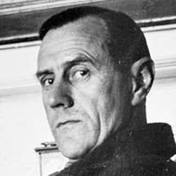
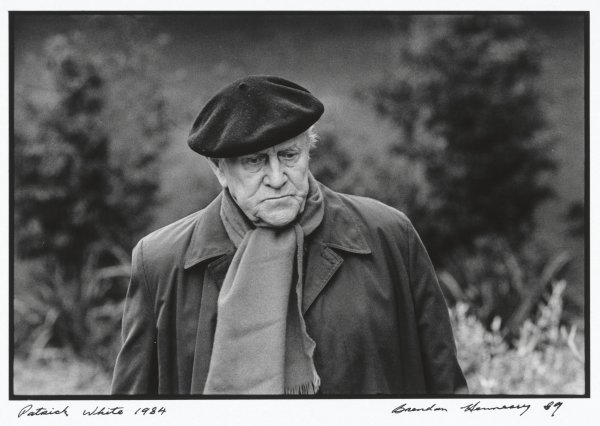
This year marks the centenary of the birth of one of our greatest writers – Patrick White, who died aged 78 in 1990. In 1972, he was awarded the Nobel Prize for Literature, he published 4 novels, several short story collections, a screen play, eight plays and an autobiography, not to mention winning the Miles Franklin Award twice.
When I saw the line-up of panelists discussing ‘Remembering Patrick White’ on Sunday, I knew it would be an event ‘not-to-be-missed’. It included writer and editor Sophie Cunningham as chair; one of Australia’s best-known literary critics Peter Craven; two-time Miles Franklin winner, author Rodney Hall: one of Australia’s leading lyrical poets and authors Alison Croggon, and finally, author and TV presenter David Marr who also wrote Patrick White’s biography, A Life.
To list all their individual achievements and accomplishments would take the length of another Blog and only serve to make us all feel like super under-achievers, so we’ll just focus on Patrick for now.
David Marr, Alison Croggon, Sophie Cunningham, Rodney Hall, Peter Craven
Sophie began the session with a delightful description of her passion for White’s work that began as a teenager. ‘He’s the writer that made me want to read Australian writers and changed the way I saw my country and books about my country. If they’d made posters of Patrick White at the time I would have put them on my wall next to Kate Bush.’ She even confessed to dating two men purely on the basis that their mothers had enjoyed afternoon tea with White. She later completed a thesis on White and says The Vivisector was one of the reasons she became a writer.
A surprise element that made the afternoon particularly special was performances from two actors reading passages from White’s books or plays that were chosen by each of the panelists. Bringing the words to life was the perfect way to celebrate White’s immense talent. It was like being jolted back to a first reading of his work — where the words jump off the page and you bow down to his to a his ability to capture the quintessential Australian spirit with vivid language; painting landscape and characters alike with unique brushstrokes.
Rodney Hall likewise spoke of his astonishment when he first read one of White’s books. ‘He sandwiches radiant insights between satiric portraits of the local community,’ he said. With lines like ‘Mrs Flack laughed like a motorbike,’ Hall said White’s writing was a workout for the imagination. ‘All his books take us to profound areas. They are exhilarating. I hope we will, once again as a nation, embrace him as essential to the voice of his generation, as a voice of Australia at a time when we were re-making ourselves as a nation separating from the British Empire. He was a brave man who gave us very brave books.’
Peter Craven chose a section from Tree of Man for a recitation. ‘After reading it for the first time, I’d never been more humbled or exulted in my life,’ he said, describing it as an intensely dramatic bush epic.
‘It’s quite unrivalled in its depiction of, if you like, common folk.’ But he speaks highly of all White’s work. ‘They’re all bloody masterpieces as far as I can see, right up to the last novel,’ he said. “In a sense, Voss is like our desert Macbeth or Hamlet.’
The best performance of the afternoon came from White’s play, A Cheery Soul — the actors winning loud applause from the audience. The piece was chosen by Alison Croggon, She expressed disappointment that Australia had never given White’s plays the appreciation they deserved. ‘He has a novelist’s gift for character, and, crucially, a poet’s ear for the sensuous properties of language. I’ve never understood those who dismiss Patrick White’s plays as secondary works. Is it simply that we like our artists to fit neatly into pigeonholes?’ She then read a quote about literary critics being suspicious of writers who change genres and agreed with critic John McCallum who believed White to be “one of the most important Australian stage writers of the 20th century”.
The most engaging delivery came, understandably, from David Marr. Not only does he use his experience as a television presenter to talk naturally to the audience, as White’s biographer, he has a depth of knowledge that allows him to speak freely without notes. Marr spent six years in White’s company writing the book and admits that toward the end, ‘it got a bit ragged.’ White was ill and becoming impatient it was taking too long. ‘He’d ring me up and say “When are you going to finish that fucking book?” And slam down the phone.’
But Marr relates the story fondly and staunchly defends White against accusations of surliness and having a bad temper. Marr believes White didn’t allow many people into his world because he was wholly dedicated to his life as an artist. He wouldn’t compromise. ‘He went at his life with a ferocity,’ said Marr, ‘determined to be the artist he knew he had to be. He had to lock people out. He had to say no. He was keeping the world at bay and his head down. He was with the people he needed to be with. But that took a toll on him. He was in fact the most generous of men and could be the most welcoming of men. And he wanted to be great. This man was a wholly serious artist.’ Marr says it was only because of being that way, that White was able to give us what we have today.
I think we can forgive him, don’t you?
(p.s.. And thank you David Marr for giving me an excuse for the next time I want to be a cranky old bastard.)