Big Ideas – Telling the World’s Stories

As a journalist, I was naturally drawn to the Melbourne Writers Festival event, ‘BIG IDEAS — Telling the World’s Stories: What happens when the Journalists Leave?’ Likewise, so was Melbourne’s public and journalistic community, with the session at the BMW Edge being a sold-out event.

Margaret Simons

Chairing the panel was award-winning freelance journalist Margaret Simons, who is also the Director for the Centre for Advanced Journalism at Melbourne University and the author of ten books.

The focus was on how media reporting is changing in a world where our tools of communication are better than ever before. How is journalism being influenced by social media and the blogosphere? What impact is the ability of people to tell their own stories, through Facebook or Twitter, having on the news?


Special guest of the night was US scribe Andy Carvin, best known as the world’s leading Twitter journalist – although he tweeted last night ‘Don’t’ call me a Twitter journalist’  — even though he’s famous for using Twitter as a news-breaking device.To demonstrate the immediacy of the social networking tool, Carvin tweeted throughout the session – and still seemed to keep up with the questions thrown his way.

Panel discussion: 'Big Ideas - Telling the World's Stories'

Panel discussion: ‘Big Ideas – Telling the World’s Stories’

Carvin is currently employed as the senior strategist for US public service radio broadcaster NPR. He’s also the founding director of the Digital Divide Network, which has an online community of more than 10,000 internet activists in more than 140 counties. He uses his twitter community to help with research when he’s out in the field, with information such as tracking aeroplane routes and shipping times.

Carvin’s Google Plus profile reads ‘I tweet revolutions’. So what is the most important story he’s broken with Twitter?

Andy Carvin

Andy Carvin

I think it depends how you define that,’ he said. ‘I was one of a handful of people who really forced a lot of people on-line to really pay attention to what was going on in Libya and also kept an eye on Syria while everyone’s eyes were off the ball. So in the grand scheme of things, I think my collective work was most important in Libya and Syria.’

‘In terms of specific stories, I was one of the first people to raise questions about the Bloggergate girl in Damascus when she was kidnapped a year ago in June.

(if you’d like to read more about this, go to storify.com/acarvin  )

Another story involved several Arabic news sites claiming that Israel was secretly supplying weapons to Gaddafi. ‘With the help of my Twitter followers we were able to prove, almost within a matter of minutes, that the evidence they had only proved they had access to what are know as star-shells or elimination rounds which light up the sky at night, ‘ said Carvin. ‘The only evidence they were using was a six-pointed star on these munitions and we found evidence of that symbol going all the way back to World War One, as the standard symbol and so it had nothing to do with Israel.  Nonetheless, many Arabic news services were running with it.’

For now, Carvin is taking a break from journalism to write a book about his experiences.

Margaret Simons took matters beyond the actual reporting of stories to ask,  ‘What is the media failing to do?’ For instance, she said, they will sweep like a pack on a story in a foreign country, put a certain issue in the spotlight and then depart so that the problem is again forgotten and communities are left to fend for themselves.


Dominic Frigugilietti

Dominic Frigugilietti

Domenic Friguglietti, Head of ABC International Development which supports Asia Pacific partners with communication development programs, talked about the progress they’ve made in Cambodia. Slowly but surely, starting from a grassroots level, they’ve made progress strengthening media operations there and implementing new projects.

‘The citizen-journalist relationships in Cambodia are very important,’ he said. ‘We’ve been encouraging talkback radio, starting with a pilot in an environment more open to change. So you start softly and build your way up to topics such as the HIV epidemic and human trafficking.’

He said they’ve also made progress in Papua New Guinea, where domestic violence has been a huge issue. ‘We’re tapping into citizen and social media and how it can be used a a dual tool. We ran a campaign last year called ‘Use Your Voice’. It worked because we got someone who confessed to being involved in domestic violence in the past, to speak out against it and lead the campaign. It’s about utilizing and harnessing the power of communication and we’re only just learning about that now. But at least in PNG and Vanuatu, there’s a lot more freedom in the media.’

So given the views of the panel, it would appear we need both approaches – one immediate and one long-term – to tackle different types of BIG ISSUES worldwide. For Carvin, when there’s an IMMEDIATE CRISIS, it’s about encouraging as many people as possible to get up to speed with the ability to impart information quickly through tools such as Twitter, and for Friguglietti the key to tackling SOCIAL ISSUES is sustaining long-term relationships and providing a constant presence.


Why we love Patrick White

The Melbourne Writers Festival program is so incredibly diverse, it’s often difficult to decide which sessions to attend on any given day. It’s impressive, not just because of the topical matters being debated and the latest award-winning authors we’re able to meet, but because the festival also celebrates and pays tribute to our best writers from days past.

Patrick White

Patrick White


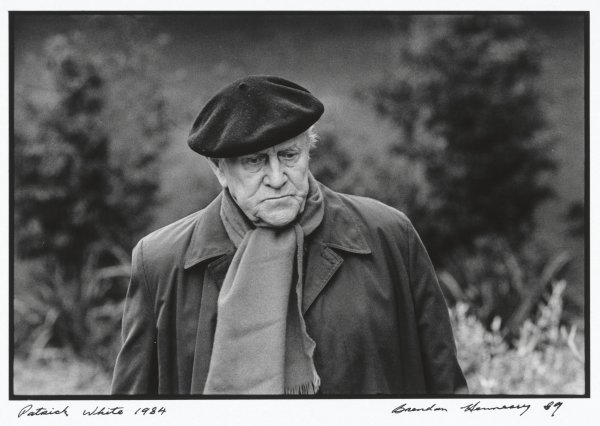
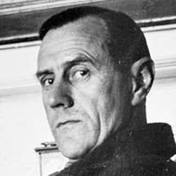
This year marks the centenary of the birth of one of our greatest writers – Patrick White, who died aged 78 in 1990. In 1972, he was awarded the Nobel Prize for Literature, he published 4 novels, several short story collections, a screen play, eight plays and an autobiography, not to mention winning the Miles Franklin Award twice.


When I saw the line-up of panelists discussing ‘Remembering Patrick White’ on Sunday, I knew it would be an event ‘not-to-be-missed’. It included writer and editor Sophie Cunningham as chair; one of Australia’s best-known literary critics Peter Craven; two-time Miles Franklin winner, author Rodney Hall: one of Australia’s leading lyrical poets and authors Alison Croggon, and finally, author and TV presenter David Marr who also wrote Patrick White’s biography, A Life.

To list all their individual achievements and accomplishments would take the length of another Blog and only serve to make us all feel like super under-achievers, so we’ll just focus on Patrick for now.

David Marr, Alison Croggon, Sophie Cunningham, Rodney Hall, Peter Craven

David Marr, Alison Croggon, Sophie Cunningham, Rodney Hall, Peter Craven

Sophie began the session with a delightful description of her passion for White’s work that began as a teenager. ‘He’s the writer that made me want to read Australian writers and changed the way I saw my country and books about my country. If they’d made posters of Patrick White at the time I would have put them on my wall next to Kate Bush.’ She even confessed to dating two men purely on the basis that their mothers had enjoyed afternoon tea with White. She later completed a thesis on White and says The Vivisector was one of the reasons she became a writer.

A surprise element that made the afternoon particularly special was performances from two actors reading passages from White’s books or plays that were chosen by each of the panelists. Bringing the words to life was the perfect way to celebrate White’s immense talent. It was like being jolted back to a first reading of his work — where the words jump off the page and you bow down to his to a his ability to capture the quintessential Australian spirit with vivid language; painting landscape and characters alike with unique brushstrokes.

Author Rodney Hall

Author Rodney Hall


Rodney Hall likewise spoke of his astonishment when he first read one of White’s books. ‘He sandwiches radiant insights between satiric portraits of the local community,’ he said. With lines like ‘Mrs Flack laughed like a motorbike,’ Hall said White’s writing was a workout for the imagination. ‘All his books take us to profound areas. They are exhilarating. I hope we will, once again as a nation, embrace him as essential to the voice of his generation, as a voice of Australia at a time when we were re-making ourselves as a nation separating from the British Empire. He was a brave man who gave us very brave books.’


Peter Craven chose a section from Tree of Man for a recitation. ‘After reading it for the first time, I’d never been more humbled or exulted in my life,’ he said, describing it as an intensely dramatic bush epic.

The Aunt's Story and The Tree of Man

The Aunt’s Story and The Tree of Man

‘It’s quite unrivalled in its depiction of, if you like, common folk.’ But he speaks highly of all White’s work. ‘They’re all bloody masterpieces as far as I can see, right up to the last novel,’ he said. “In a sense, Voss is like our desert Macbeth or Hamlet.’

Poet and author Alison Croggon

Poet and author Alison Croggon


The best performance of the afternoon came from White’s play, A Cheery Soul — the actors winning loud applause from the audience. The piece was chosen by Alison Croggon, She expressed disappointment that Australia had never given White’s plays the appreciation they deserved. ‘He has a novelist’s gift for character, and, crucially, a poet’s ear for the sensuous properties of language.

 I’ve never understood those who dismiss Patrick White’s plays as secondary works. Is it simply that we like our artists to fit neatly into pigeonholes?’ She then read a quote about literary critics being suspicious of writers who change genres and  agreed with critic John McCallum who believed White to be “one of the most important Australian stage writers of the 20th century”.


The most engaging delivery came, understandably, from David Marr. Not only does he use his experience as a television presenter to talk naturally to the audience, as White’s biographer, he has a depth of knowledge that allows him to speak freely without notes. Marr spent six years in White’s company writing the book and admits that toward the end, ‘it got a bit ragged.’ White was ill and becoming impatient it was taking too long. ‘He’d ring me up and say “When are you going to finish that fucking book?” And slam down the phone.’

Patrick White

Patrick White

But Marr relates the story fondly and staunchly defends White against accusations of surliness and having a bad temper. Marr believes White didn’t allow many people into his world because he was wholly dedicated to his life as an artist. He wouldn’t compromise. ‘He went at his life with a ferocity,’ said Marr, ‘determined to be the artist he knew he had to be. He had to lock people out. He had to say no. He was keeping the world at bay and his head down. He was with the people he needed to be with. But that took a toll on him. He was in fact the most generous of men and could be the most welcoming of men.  And he wanted to be great. This man was a wholly serious artist.’ Marr says it was only because of being that way, that White was able to give us what we have today.

I think we can forgive him, don’t you?

(p.s.. And thank you David Marr for giving me an excuse for the next time I want to be a cranky old bastard.)


Melbourne Writers Festival Weekend Wrap

It’s been a fast-paced, jam-packed weekend — trying to get to sessions at the Melbourne Writers Festival on time and post blog reports — juggling train cancellations, sleep deprivation and children’s sporting logistics in with the mix. Here’s a quick summary of how it panned out:

10.30:  Saturday morning – meet with fellow ‘Emerging Bloggers’ for brunch at Beer Deluxe in Federation Square. Running late, I realise I’ve left my festival guide at home. Oops…

Federation Square

Federation Square

11.30: Head to see former Premier Steve Bracks discuss his new book at BMW Edge. Unaware of a location change, I walk in to find I’m at another session of The New Yorker team. A fortunate turn of events as they are much more animated than the night before.

1.00: Attempt to see event ‘Why I Read’ and am directed to ACMI Studio 1. Sitting there, I realise as the presenters sit down that I am again in the wrong venue. The doors close and a staffer sweeps a large black velvet curtain across the door, blocking an easy exit. The presenters begin to speak as I try to inconspicuously escape behind the black curtain, causing it to billow wildly. To my horror, the glass door is locked. The attendant on the other side mouths that she can’t open the door and I will have to use the exit on the OTHER side of the room. Moritifed, I have to come out from behind the curtain and walk back into the room and up the stairs, around the back of the audience, down the stairs and out the door, while historian Geoffrey Blainey and Gideon Haigh pretend to ignore my clumsy and disruptive performance. Arghhh…

1.15 – Finally arrive at ‘Why I Read’ which is back at BMW Edge, where Sloane Crosley, Drusilla Modjeska and Sir Andrew Motion are discussing  the power of literacy to transform lives. I enter the room silently, managing to find a seat without drawing attention. Phew. Sir Andrew is discussing his childhood experience of reading The Lion, The Witch and The Wardrobe and how the image of a land frozen in ice and snow was crucial in his development as a future poet, being one of the first moments where he became aware of the power of metaphorical images. Sloane then talks about how her mother read to her from Gone With The Wind every night – a special ritual they shared and looked forward to. And Drusilla remembered vividly her teenage experience of reading Tess of the d’Urbervilles. It was the first time she became aware that redemption for the main character in a book is not always possible. It was shattering and in a sense, made her aware of how books can have a transformative experience.

2.30 – Attend a session called ‘Friendly Fire’ and WOO HOO – I arrive at the RIGHT venue and on time. Am very proud of myself. The presenters include Marieke Hardy, Benjamin Law and again, Sloane Crosley with the highly competent Estelle Tang chairing the event. It’s a funny, feisty session with all panelists performing readings from their books which brings to life their individual writing styles and personalities.

Sloane Crosley, Marieke hardy, Benjamin Law and Estelle Tang

Sloane Crosley, Marieke hardy, Benjamin Law and Estelle Tang

All have written books exposing raw material about their lives and relationships with friends, family and lovers. Questions fly about how far one is prepared to go as a writer and what you are prepared to risk by revealing so much. For Sloane, she says if it’s a good enough story you’ll figure out a way to tell it. Marieke says her instincts and feelings are consistently evolving about her writing but she doesn’t know how to write any other way. Although, she concedes, she did invite a few people she wrote about in her last book You’ll Be Sorry When I’m Dead, to have a right of reply. In the future however, Marieke wants to make comedy less of a focus in her writing and to concentrate more on a truthful emotional response to situations. Ben says his family took a fairly relaxed approach to his book, Family Law. His father didn’t even read the first manuscript, saying he was too busy and said he understood memory was selective and he accepted Ben’s story was his own interpretation of their family history.

5.00 – Catch train home to deal with domestic responsibilities.

8.00 – Head back to the city to Federation Square and BMW Edge for the MWF Opening night party. This was a wonderful opportunity to meet with everyone involved in the festival, from writers and organisers to friends and fellow bloggers. Fletch came along too and was delighted to meet New York author Sloane Crosley who I had raved to him about after interviewing her on Friday.

Me with fellow 'Emerging Blogger' Pepi Reynolds

Me with fellow ‘Emerging Blogger’ Pepi Ronalds

Julia Tulloh, Imogen Kandel, Shona Barrett

Julia Tulloh, Imogen Kandel, Shona Barrett


Sloane Crosley and Alan Fletcher

Sloane Crosley and Alan Fletcher


Presenter Estelle Tang (second from right) and friends

Presenter Estelle Tang (second from right) and friends


Me with Renee Senogles and Sloane Crosley

Me with Renee Senogles and Sloane Crosley


Much fun was had by all. The next day I attended an exceptional session ‘Remembering Patrick White’ which I think deserves a blog on its own – given it’s the centenary of the great man’s birth. Stay tuned.

A Stiff Start for The New Yorker Crew

It was like an awkward meeting between two strangers in an arranged marriage.  The conversation sputters and uncomfortable silences push them further apart. Hopes are high they’ll fall in love, but the first introduction isn’t promising.

That was how it felt at ‘An Evening with The New Yorker’ at the Melbourne Town Hall on Friday night. It was billed as one of the highlights on the Melbourne Writers Festival program — the idea of bringing Manhattan to Melbourne — with the magazine’s intelligentsia sharing their insights on what shapes one of the world’s most celebrated publications. The panel would include Editorial Director Henry Finder, art critic Peter Schjeldahl, staff writer David Grann, music critic Sasha Frere-Jones and cartoonist Roz Chast.

To start the evening, Henry Finder, with mellifluous voice and laid-back charm, explained how ninety per cent of New Yorkers read the cartoons before the articles, so ‘Why don’t we do what the New Yorkers do and look at twenty of the magazines most popular cartoons first?’ Seemed like a good idea.

All five of The New Yorker crew and the audience turned eyes upwards to the large screens dominating the wall behind the stage.

Eyes up... to see???

Eyes up… to see???

One after another, a new cartoon appeared and the rumblings from the audience grew louder and Finder began scratching his head. Hadn’t anyone thought about how tiny the words on a cartoon caption appear in a large hall and that no matter what size the cartoon, that from a distance, it’s impossible for an audience to read them?

From my seat, this is how it looked.

Unreadable cartoons

Unreadable captions and cartoons

Voices started calling out ‘We can’t read them!’ so cartoonist Roz Chast tried to help but even from her position on-stage, couldn’t. Adopting a baby voice, she bleated, ‘I can’t read it either. It’s too tiny.’ A smattering of laughter then much applause when the cartoon run finally came to an end.

Roz Chast

Roz Chast

Quickly moving on, Finder then, appropriately, introduced Chast as the magazine’s distinctive resident genius and asked her how she arrived at The New Yorker. Her delivery was entertaining, like her cartoons. While she graduated in painting, the small apartment she lived in meant it was easier to draw so she began focusing on illustrations.  When she dropped off a portfolio of about 60 cartoons to The New Yorker, she was surprised when she returned to pick it up the following week, to find not only did they want to buy one, but they also asked her to return the following week. The rest is history.

David Grann

David Grann

Next Finder introduced staff writer David Grann, who critics refer to as one of the most accomplished narrative reporters of our time. He told of how he worked from the bottom up, first as a copy editor and writing obituaries for various publications, and how that early training was essential in the process of becoming a writer. His stories were colourful and engaging – as you would expect from a specialist in his craft.


Peter Schjeldahl

Peter Schjeldahl

Then we heard from award-winning art critic Peter Schjeldahl, whose many accolades include being awarded a Guggenheim fellowship in 1995. Regardless, the man is 70 and his forte is not public speaking. He was a poet who dropped out of college in the early 60s, worked as a newspaper reporter and then became an art critic by accident. His first anecdote was fine, but as the evening wore on, his conversation and thought processes slowed, so that there were more ‘ah…um…anyway.,.ahs’ than actual words. One sentence seemed to take an entire minute to articulate. It became so frustrating, people began leaving. Someone told me they saw him nod off on stage. I’m not actually sure, because I think at some point, I did too. Not quite the riveting night I was expecting.


Sasha Frere-Jones

Sasha Frere-Jones

We also heard from music critic Sasha Frere-Jones, who started at the Village Voice. He too fell into his profession by accident; an aspiring musician who wrote a few pieces for a local paper as a favour to a friend, then became a writer. Surprisingly, for someone whose passion is music, his voice drones in monotone. I’m not sure if that’s just his style, or if he was zonked by jet lag or uncomfortable with pubic speaking. Or he’s got that uber cool, ‘I’m too hip to be here’ thing going on.


The entire evening’s presentation felt slow and disjointed. As if very little thought had been put in to what each participant was going to say and how the structure of the night would work. Perhaps the venue didn’t help. The Melbourne Town Hall is a vast, echoing space with a wood-paneled 1950s feel and a mere two potted plants on stage for decor. It feels dusty and old-fashioned – not exactly the right fit for our most forward thinking minds from New York.

The New Yorker team

The New Yorker team

I met with a group of friends afterwards to get some feedback. Was I being overly critical? Their response was similar. Joanne agreed that the Town Hall was an inappropriate choice of venue. ‘It was embarrassing. I mean, they’re our guests. It felt like a country bumpkin hall with the ghosts of debutantes past.’

Lisa was also disappointed with the structure of the evening. ‘It was a hotchpotch. It was as if they decided what to do on the night while in the Qantas club lounge or while they were on the plane,’ she said. ‘And the art critic was excruciating. I mean, he had some good stories to tell but he was all over the place. At the same time, I loved David Grann and his story about the giant squid.’

The New Yorker

The New Yorker

Jaqui, an avid New Yorker fan, had a far more positive view. She said her family subscribes to the magazine so they can leave it hanging around their coffee table to impress visitors. ‘It’s so we can look really pretentious at home,’ she said, laughing. ‘And I fully read all the cartoons first, like they said. They have such in-depth stuff on so many fascinating things. Mad professors that are doing work at UCLA, authors that were writing in Dickens time. It’s great stuff. So tonight it was good to hear how they put it together behind the scenes. Roz was very Manhattan. And Sasha was pretty cool. The way he swaggered in. It’s that whole New York thing. And I could have listened to David Grann all night.’ A satisfied customer.

Yesterday a happy accident occurred to alter my point of view. I was planning to listen to former Premier Steve Bracks discuss his book and didn’t realize there had been a change of venue. So when I walked into the BMW Edge auditorium, there was the team from The New Yorker – AGAIN. This time, ‘What’s the Story’ was topic of discussion. I stayed to see how they fared compared with Friday night.

Maybe they’d all had a good night’s sleep. Maybe it was the modernity and impressive architecture of the BMW Edge that lifted their spirits. Whatever the reason, it was a far more vibrant and entertaining session. Frere-Jones, in particular, was more animated, his voice conveying a lively timbre, his hands gesturing to emphasise a particular point. He even expressed with humility, a certain astonishment that he had come to work for such a prestigious publication. ‘You get sucked up into this spaceship and you wonder how it all happened,’ he said. ‘Even now, I wonder when I talk, do I sound like I work for The New Yorker?’

Finder was impressive as moderator, asking more pertinent questions and summing up the talents of his staff, like Frere-Jones, with eloquence. ‘Sasha has an effortless authority without being chesty about it,’ he said. Lovely.

David Grann was again the standout as a storyteller with intriguing tales of his most challenging journalistic assignments.

The applause at the end of the session was thunderous, the crowd enamoured. Perhaps this arranged marriage will work out after all. Melbourne and The New Yorker do see to get along quite nicely. How much is a subscription, anyway?


WHY AUTHOR SLOANE CROSLEY TAKES THE CAKE

It’s only day two, but New York author Sloane Crosley wins a gold medal for best interview stamina of the Melbourne Writers Festival in my book. After landing in Melbourne direct from a two-day stop-over in Los Angeles, she walked straight into the hotel foyer with bags in tow and happily joined me for an interview over much-needed coffee.

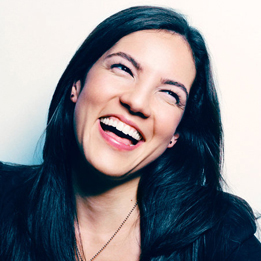
Sloan Crosley

Sloane Crosley

No unpacking and not even a quick visit to her room to ‘freshen up’. And she was smiling without a hint of jet lag . In fact, she was positively beaming. Probably because she has been wanting to visit Australia for many years and is delighted to have finally arrived. Her family almost moved here when she was a child, so she developed a slight obsession with all things Down Under.

Crosley says she was thrilled when the MWF asked her to take part. ‘The first thing I did when I got the invitation was to forward it to my family and watch them writhe in jealousy,’ she says. ‘I’m always surprised when the humour in my books translates in another country, even an English-speaking country, but it’s great.’

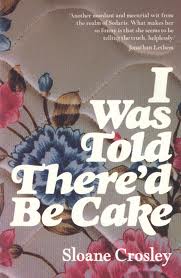
I Was Told There'd Be Cake

I Was Told There’d Be Cake

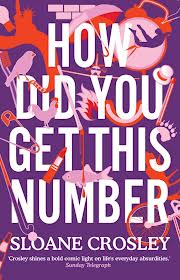
Both Crosley’s books  I Was Told There’d Be Cake (2008) and How Did You Get This Number (2010) became The New York Times bestsellers. The first, written when Crosley was 26-years-old and published at 28, quickly became a huge success. It wasn’t something she’d anticipated, having worked as a publicist in a publishing house where she knew how difficult the road to literary glory could be.

”The first book, I didn’t know what I was doing. I worked with these amazing authors. I knew how hard it is. And being close to them did not have the effect of making me feel “Oh, I can do this too”. It had the adverse effect. I will never, ever be Tony Morrison.’

‘I’d also been told not to expect anything, because it was a book of essays and it wasn’t expected this genre would be as popular as it was. So it was surprising.’

And she sprinkles her conversation with the same style of self-deprecating humour that is a trademark of her books. ‘Sometimes I see people reading my books on the subway, And sometimes they look so tragically bored, I just want to trip them over when they leave,’ she says, laughing.

It’s unlikely Crosley will ever use the word ‘cake’ in a book title again. ‘I put on about ten pounds, because everywhere I’d go, there was cake. It was the same thing at all the book launches. It was great. And it was awful. The second book is a lot darker and the essays are longer. It’s a much bigger book. I think I was in a bad mood when trying to write a humour book.’

How Did You Get This Number

How Did You Get This Number

 Crosley says she always knew she wanted to write, although initially at college she studied archeology and anthropology before switching to a literature major. Next she moved on to several internships at magazines and became a contributor to a long list of publications, including The New York TimesThe GuardianThe Irish TimesThe New York ObserverThe Village VoiceVice Magazine,ElleGlamourVogueWTeen Vogue, Salon.com, GQ,EsquirePlayboy MagazineSelfMaxim MagazineSPIN and Black Book magazine – writing essays and interviews. She was also a weekly columnist for The Independent in the UK and was the editor of The Best American Travel Essays 2011.

There have been plenty of accolades too.  I Was Told There’d Be Cake also won The Best Audio Books Of The Year by Library Journal and was one of Amazon.com’s Best Books of 2008. Plus, in 2009, I Was Told There’d Be Cake was a finalist for the Thurber Prize for American Humor.

During the festival, Crosley is sitting on panels over four sessions this weekend. The one that sparks my interest is tomorrow at 2.30 – Friendly Fire. It’s all about how far authors are prepared to go when writing about friends and family and whether they’re prepared to put relationships at risk. I Was Told There’d Be Cake is brutally and refreshingly honest, so did Crosley have any concerns about a backlash when she was writing?

‘I genuinely didn’t think that many people would read it. There are parts of it that are a little cruel that I would go back and change. But not because they’re mean. More because they’re not as well written as I would like them to be. ‘

So were there people in her life, maybe her parents, who were offended? She takes a moment to consider before answering. ‘I try to protect people. You change things, such as defining characteristics. But my parents were fine with it. The truth is, it’s a nice portrait of them, so it’s fine. In fact, considering what gets said around the Thanksgiving table, they got off easy.’

Some critics have described Crosley as a modern-day Dorothy Parker. She’s flattered by the comparison. ‘There’s a great Dorothy Parker quote,’ she says, ‘that “Humour should always be used as a shield and never as a sword.” Very lovely but very hard to sustain over the course of a book.’

There was one friendship that went by the wayside as a result of the Cake book, however Crosley says it had practically ended anyway. ‘That was partly what that essay was about. So it is a little bit mean but to my mind, it’s worth the sacrifice because it makes a larger point about what happens when friends grow up – what they hang on to and what they don’t. It’s about how complicated women’s relationships can be. Everyone knows that a break-up with a woman can often be more difficult than with a man, and so that’s what it’s about.’

The second friendship to suffer a minor fracture was due to Crosley painting a friend’s boyfriend in a negative light, not knowing how serious the relationship was and that they would later become engaged. Unsurprisingly, she was left off the guest list for the wedding.

Now she’s flexing her literary strengths in new directions — writing a novel and a screenplay. ‘It’s slightly harder, but it’s like using a different muscle. With non-fiction you’re dealing with things that have actually happened to you. With fiction, it feels strange when it’s going well because you have made up these characters and they feel so real. Thats a sign of insanity, right?’

Being early days, Crosley would rather stay tight-lipped on what both projects are about. But she does have some good advice on writing processes. It’s all about getting rid of distractions. ‘I do have to have some sort of pattern and structure. I am not allowed to check any emails before I write at least 250 words. No errands in the middle of the day otherwise I don’t feel like it’s a work day. The groceries, the laundry, the gym — all of that stuff gets done some other time. And interviews. Mostly I just try to concentrate on sitting down and writing as much as I can. I get up and make coffee, have breakfast and then right about 7.30 or eight and write till about lunch. And then I say I can have the afternoon off but I often do a bit more writing.’

Sloane and me

Sloane and me

As for other interests, Crosley says she’s a very bad guitar player and singer. But she does have a crafty side — making dioramas for each chapter from her last book and birthday cards for friends.

As for her ultimate goal in life, it’s about being true to herself. ‘There’s a quote by someone else that I’ll use here. “The genius is the one in the room who is most like himself.” My goal in life is to be most like myself.’

I think I got a pretty good version of that this morning – charming, witty and warm.  Welcome to Melbourne Sloane Crosley!

(Sloane Crosley is taking part in the Melbourne Writers Festival tomorrow at 10am, 1pm and 2.30pm. Also on Sunday at 6.00pm. Check the MWF website at http://www.mwf.com.au for more details.)